


Some error occured while loading the Quick View. Please close the Quick View and try reloading the page.
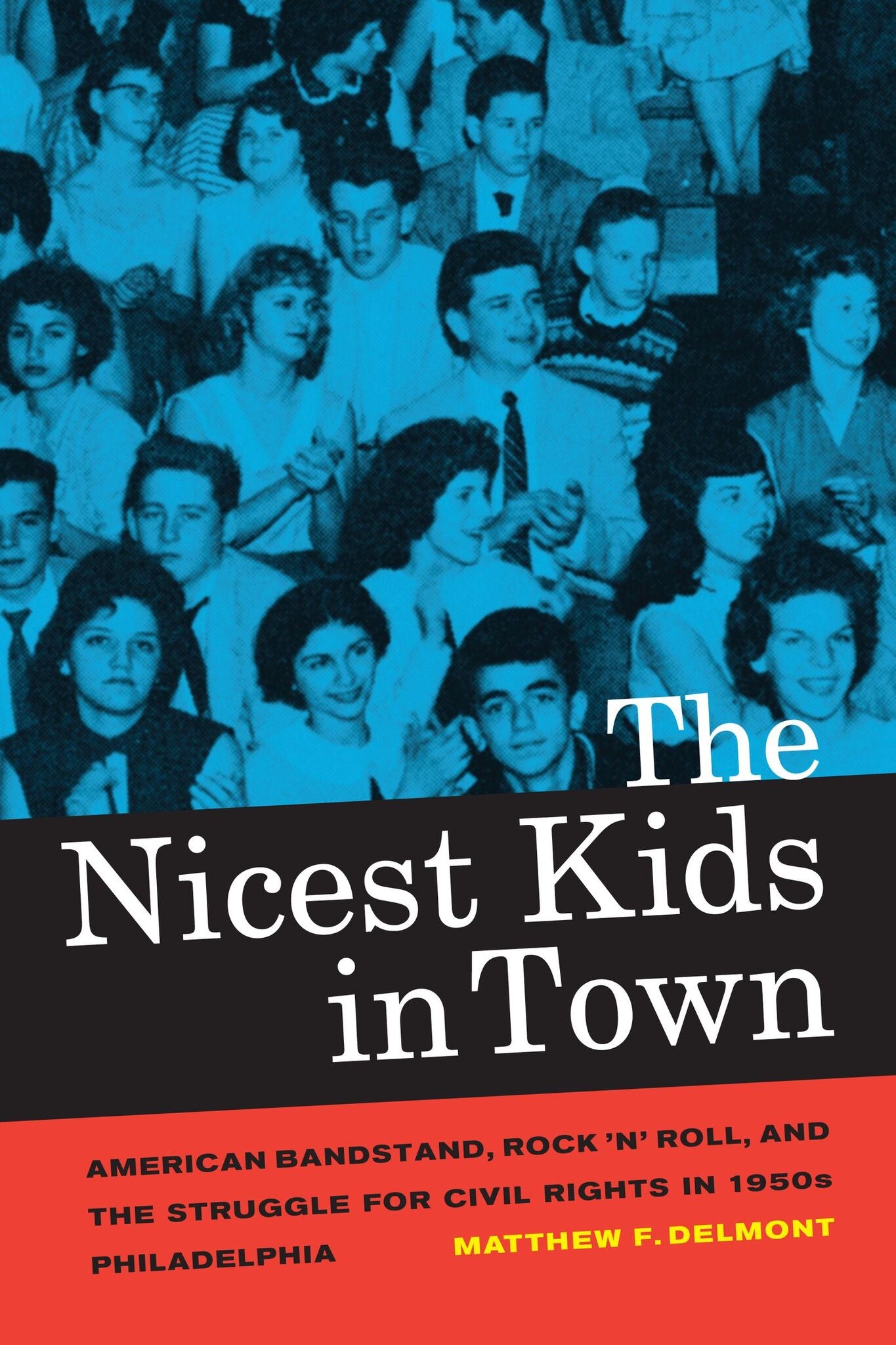
American Bandstand, one of the most popular television shows ever, broadcast from Philadelphia in the late fifties, a time when that city had become a battleground for civil rights. Counter to host Dick Clark’s claims that he integrated American Bandstand, this book reveals how the first national television program directed at teens discriminated against black youth during its early years and how black teens and civil rights advocates protested this discrimination. Matthew F. Delmont brings together major themes in American history—civil rights, rock and roll, television, and the emergence of a youth culture—as he tells how white families around American Bandstand’s studio mobilized to maintain all-white neighborhoods and how local school officials reinforced segregation long after Brown vs. Board of Education. The Nicest Kids in Town powerfully illustrates how national issues and history have their roots in local situations, and how nostalgic representations of the past, like the musical film Hairspray, based on the American Bandstand era, can work as impediments to progress in the present.

Price: $70.00
Pages: 312
Publisher: University of California Press
Imprint: University of California Press
Series: American Crossroads
Publication Date:
22 February 2012
Trim Size: 9.00 X 6.00 in
ISBN: 9780520272071
Format: Hardcover
BISACs:
“Reveals a hidden history of racial segregation on the United States' first television program centered on the teenage population. . . . Provocative.”
Matthew F. Delmont is Assistant Professor of American Studies at Scripps College.
List of Illustrations
Acknowledgments
Introduction
1. Making Philadelphia Safe for “WFIL-adelphia”
Television, Housing, and Defensive Localism in Bandstand’s Backyard
2. They Shall Be Heard
Local Television as a Civil Rights Battleground
3. The de Facto Dilemma
Fighting Segregation in Philadelphia Public Schools
4. From Little Rock to Philadelphia
Making de Facto School Segregation a Media Issue
5. The Rise of Rock and Roll in Philadelphia
Georgie Woods, Mitch Thomas, and Dick Clark
6. “They’ll Be Rockin’ on Bandstand, in Philadelphia, P.A.”
Imagining National Youth Culture on American Bandstand
7. Remembering American Bandstand, Forgetting Segregation
8. Still Boppin’ on Bandstand
American Dreams, Hairspray, and American Bandstand in the 2000s
Conclusion
Everybody Knows about American Bandstand
Notes
Index
Acknowledgments
Introduction
1. Making Philadelphia Safe for “WFIL-adelphia”
Television, Housing, and Defensive Localism in Bandstand’s Backyard
2. They Shall Be Heard
Local Television as a Civil Rights Battleground
3. The de Facto Dilemma
Fighting Segregation in Philadelphia Public Schools
4. From Little Rock to Philadelphia
Making de Facto School Segregation a Media Issue
5. The Rise of Rock and Roll in Philadelphia
Georgie Woods, Mitch Thomas, and Dick Clark
6. “They’ll Be Rockin’ on Bandstand, in Philadelphia, P.A.”
Imagining National Youth Culture on American Bandstand
7. Remembering American Bandstand, Forgetting Segregation
8. Still Boppin’ on Bandstand
American Dreams, Hairspray, and American Bandstand in the 2000s
Conclusion
Everybody Knows about American Bandstand
Notes
Index